
DISC is one of the most popular behavioral assessments in the world for a reason!
Here’s everything you need to know about TTI Success Insights’ version of the DISC assessment.
Key Takeaways
- DISC is a behavioral assessment that measures how people communicate, work, and respond to challenges.
- The four DISC styles—Dominance, Influence, Steadiness, and Compliance—combine to create a unique behavioral profile.
- DISC helps individuals and teams improve communication, reduce conflict, and increase productivity.
- TTI’s DISC stands out by analyzing the full behavioral graph, not just dominant traits.
- DISC can be used for coaching, hiring, team building, and leadership development across organizations.
Here Is Everything You Need to Know About DISC
From the benefits of the assessment to the ways individuals, teams and organizations can benefit from its insights.
What is DISC?
DISC is a widely used behavioral assessment model that measures four separate behavioral factors: Dominance, Influence, Steadiness, and Compliance.
In simple terms, the DISC assessment measures how a person does what they do. It creates a shared language around observable behavior, making it easier to understand and communicate with others.
To fully understand DISC, it’s important to see how the four components work together. While most people may have one or two dominant traits, it’s the combination of all parts of DISC that defines a person’s unique behavioral makeup.
A DISC assessment is a behavioral evaluation that measures how a person naturally approaches tasks, interacts with others, and responds to situations. While many people think a DISC assessment is a personality test, it’s not. TTI’s DISC is not pass or fail. The tool measures behaviors, not personality.
What Does Each Behavioral Factor Measure?

D – Dominance
- This behavioral factor measures how someone responds to problems and challenges.
- If your highest score is D, you are a Direct communicator.
- If your lowest score is D, you are a Reflective communicator.
I – Influence
- This behavioral factor measures how someone chooses to influence people and contacts.
- If your highest score is I, you are an Outgoing communicator.
- If your lowest score is I, you are a Reserved communicator.

S – Steadiness
- This behavioral factor measures how someone responds to pace and consistency.
- If your highest score is S, you are a Predictable communicator.
- If your lowest score is S, you are a Dynamic communicator.

C – Compliance
- This behavioral factor measures how someone responds to procedures and compliance.
- If your highest score is C, you are a Precise communicator.
- If your lowest score is C, you are a Pioneering communicator.
Did TTI Create DISC?
TTI did not create DISC. It was developed by Walter V. Clarke, an industrial psychologist, based on William Moulton Marston’s behavioral theory.
The DISC assessment has evolved since its development in the 1960s and is now one of the most widely used behavioral tools worldwide.
What Makes TTI’s DISC Different From Other Providers?
DISC is a popular assessment, and many organizations offer it. However, TTI’s approach provides deeper, more actionable insight.
A Holistic Insight
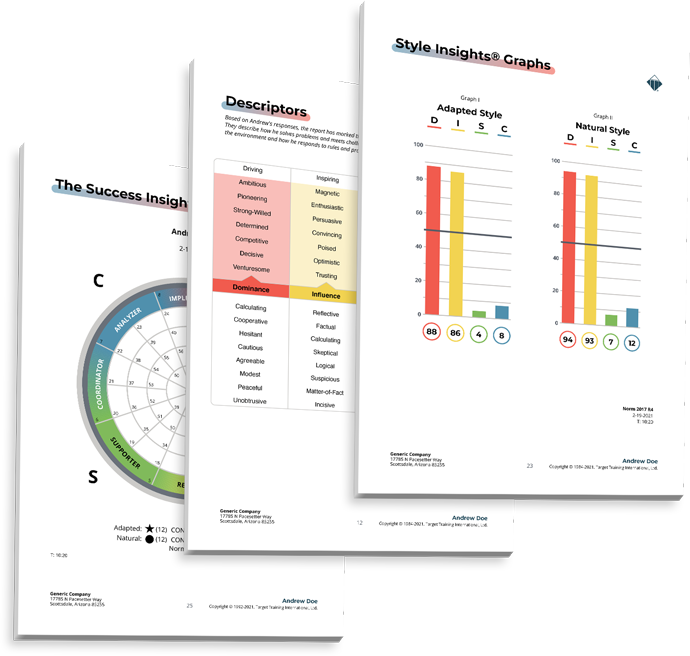
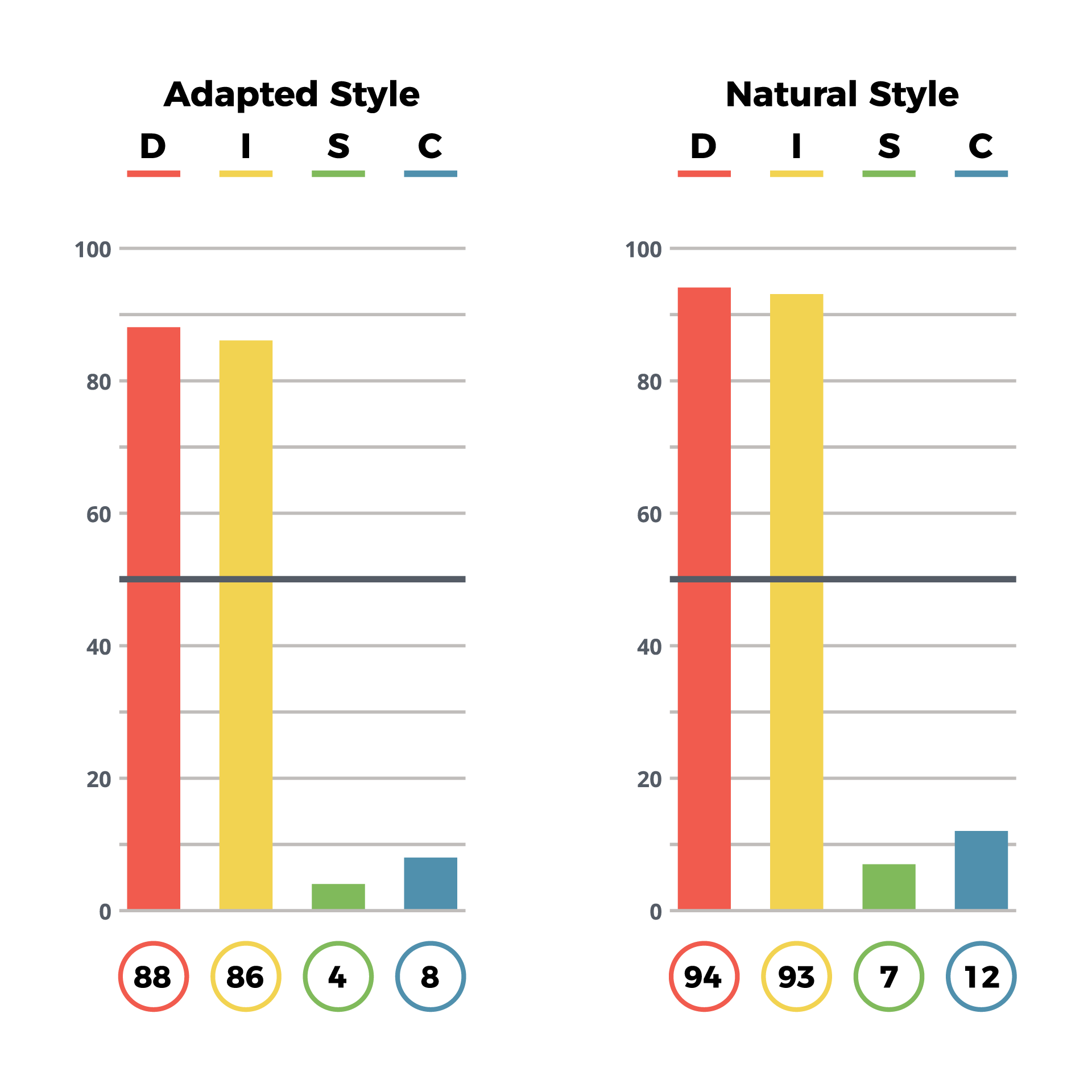
TTI is unique in analyzing the entire DISC graph, not just scores above the “energy line.” (The energy line sits at 50; scores above it are typically considered dominant.)
By fully evaluating all four factors and including both high and low scores, TTI delivers a more complete and accurate picture of behavior, leading to better insights and stronger development outcomes.
Innovation Since Day 1
TTI introduced the first computerized, personalized DISC reporting system in 1984, setting the standard for modern assessments.
In-House Research
TTI Success Insights has over 40 years of research and maintains an in-house “brain lab” to validate and refine its assessments.
This research is internally and externally validated and peer-reviewed, ensuring accuracy and reliability.
Learn more about our research department here.

Who Can Use DISC?
DISC is designed for individuals, teams, and entire organizations. While it measures individual behavior, those insights can be scaled and applied across groups.
For Individuals
DISC helps individuals understand the “how” behind their behavior and communication style.
Taking a DISC assessment can help people:
- Reduce unnecessary conflict
- Increase productivity and engagement
- Improve communication skills
- Leverage natural strengths
- Build self-awareness
For 2 People: The Comparison Report
The DISC Comparison Report analyzes how two individuals interact, highlighting similarities, differences, and communication strategies.
Who Can Use a Comparison Report?
- Manager to direct report
- 2 candidates applying for the same position
- Any two people conflicting with each other
- New hire to boss
- Partners with each other
This report is a powerful tool for improving relationships and reducing miscommunication.
For 3 or More People: The Team Report
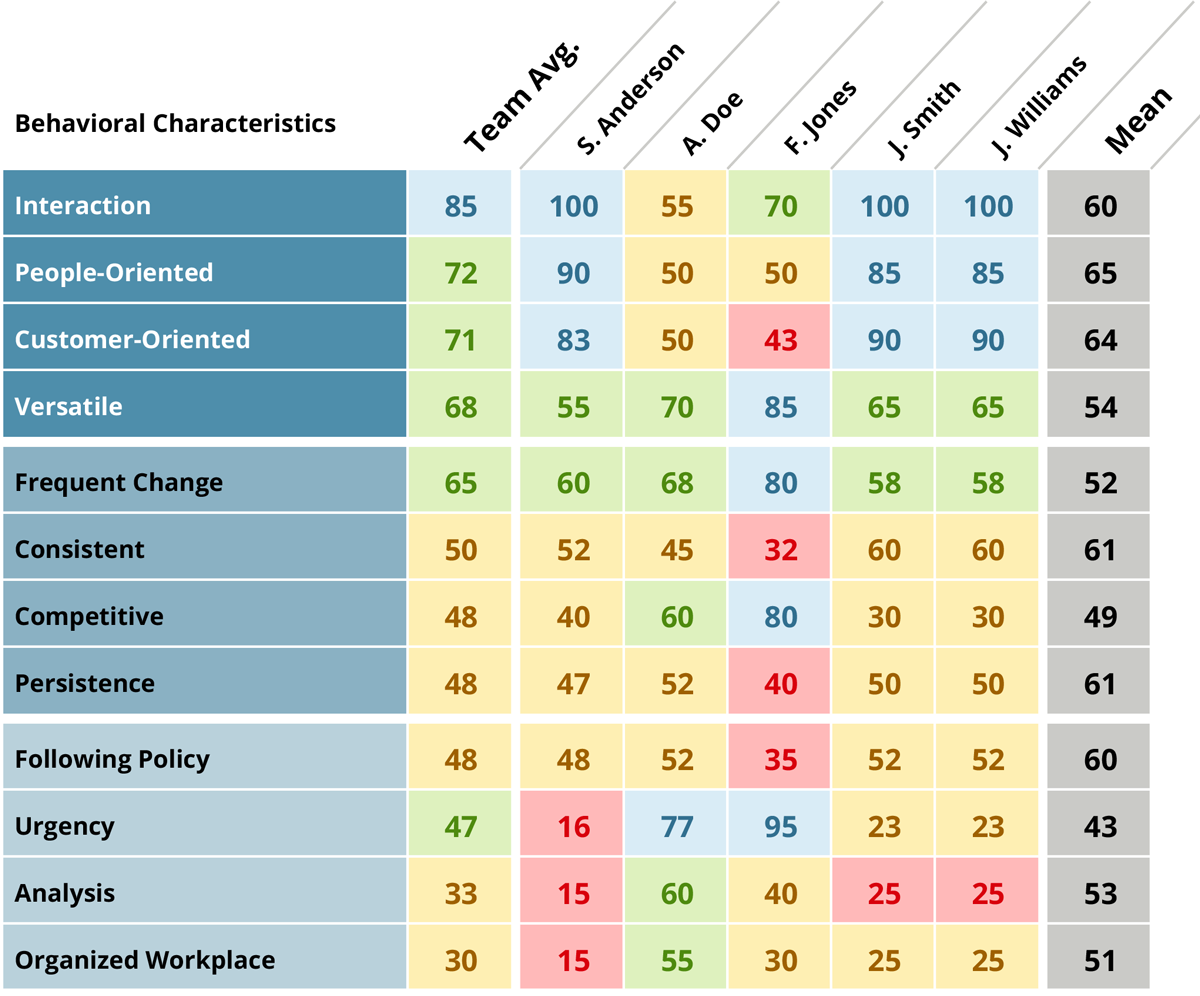
The DISC Team Report expands these insights across three or more people, offering a full view of team dynamics.
It helps teams:
- Identify communication gaps
- Improve collaboration and productivity
- Understand team strengths and blind spots
- Align working styles across projects
- Build stronger, more effective relationships
One of the biggest benefits is helping leaders understand how to maximize team performance by leveraging behavioral diversity.
For Entire Organizations
Organizations can use DISC to improve engagement, communication, and performance at scale.
While individual insights are valuable, DISC is most effective when applied at the team level across departments.
By using DISC to develop individuals and align teams, organizations can drive measurable improvements in culture and results.
How Can You Use DISC Right Now?
DISC is often the starting point for behavioral development because it is simple, practical, and immediately applicable.
Use DISC to support…
- Coaching and mentoring
- Team building initiatives
- Employee training programs
- Leadership development
If you’re looking for fast, actionable insights to improve performance, DISC is one of the most effective tools available.
What’s Your Next Step With DISC?
Ready to apply DISC in your organization? Want to join the TTI network as a partner? Get started now.