
Now more than ever, emotional intelligence is the key to creating an effective workplace. If you’ve ever had questions about what emotional intelligence is, the EQ assessment, or how you can apply EQ skills in your life right now, we have answers.
Key Takeaways
- Emotional intelligence (EQ) is the ability to understand, manage, and apply emotions to improve communication and relationships.
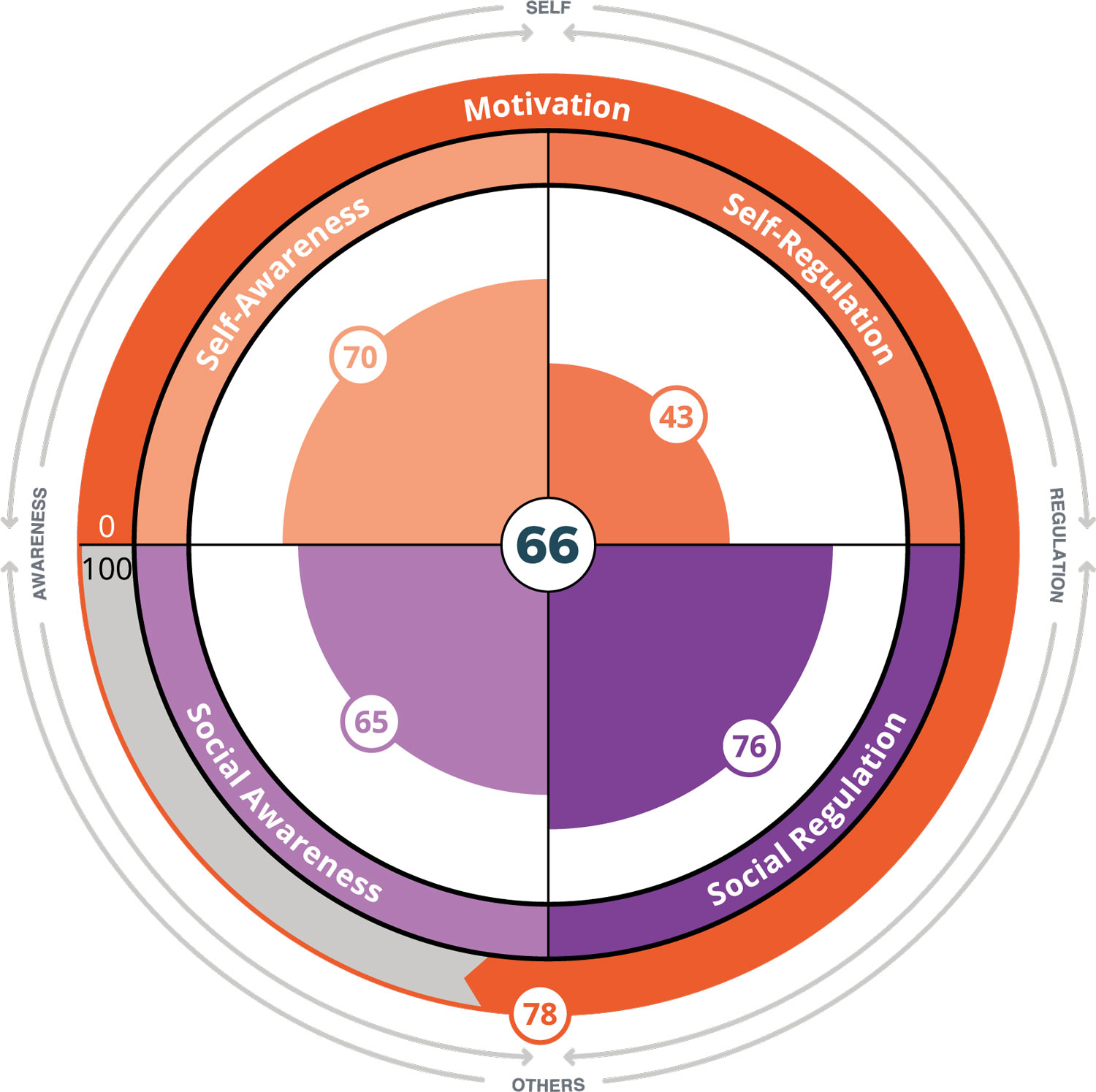
- TTI’s EQ assessment measures five core areas: self-awareness, self-regulation, motivation, social awareness, and social regulation.
- TTI’s EQ assessment helps individuals and teams improve collaboration, leadership, and workplace performance.
- EQ is one of the most in-demand workplace skills, driving engagement, productivity, and success.
Developing emotional intelligence skills can improve hiring outcomes, leadership effectiveness, and team dynamics.
Here Is Everything You Need to Know About EQ
From the assessment’s benefits to the ways individuals, teams, and organizations can benefit from its insights.
What is Emotional Intelligence?
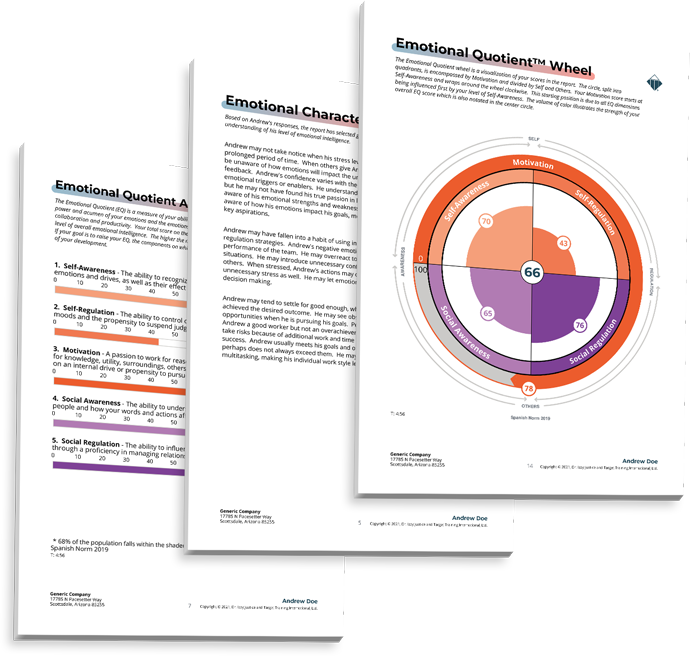
Emotional intelligence (EQ) is the ability to sense, understand, and effectively apply emotions to drive higher levels of collaboration and productivity.
While the concept has existed for decades, the term “emotional intelligence” was popularized by Daniel Goleman in the 1990s.
EQ (Emotional Quotient) is a measure of how effectively you manage your emotions and interact with others.
What Does the EQ Assessment Measure?
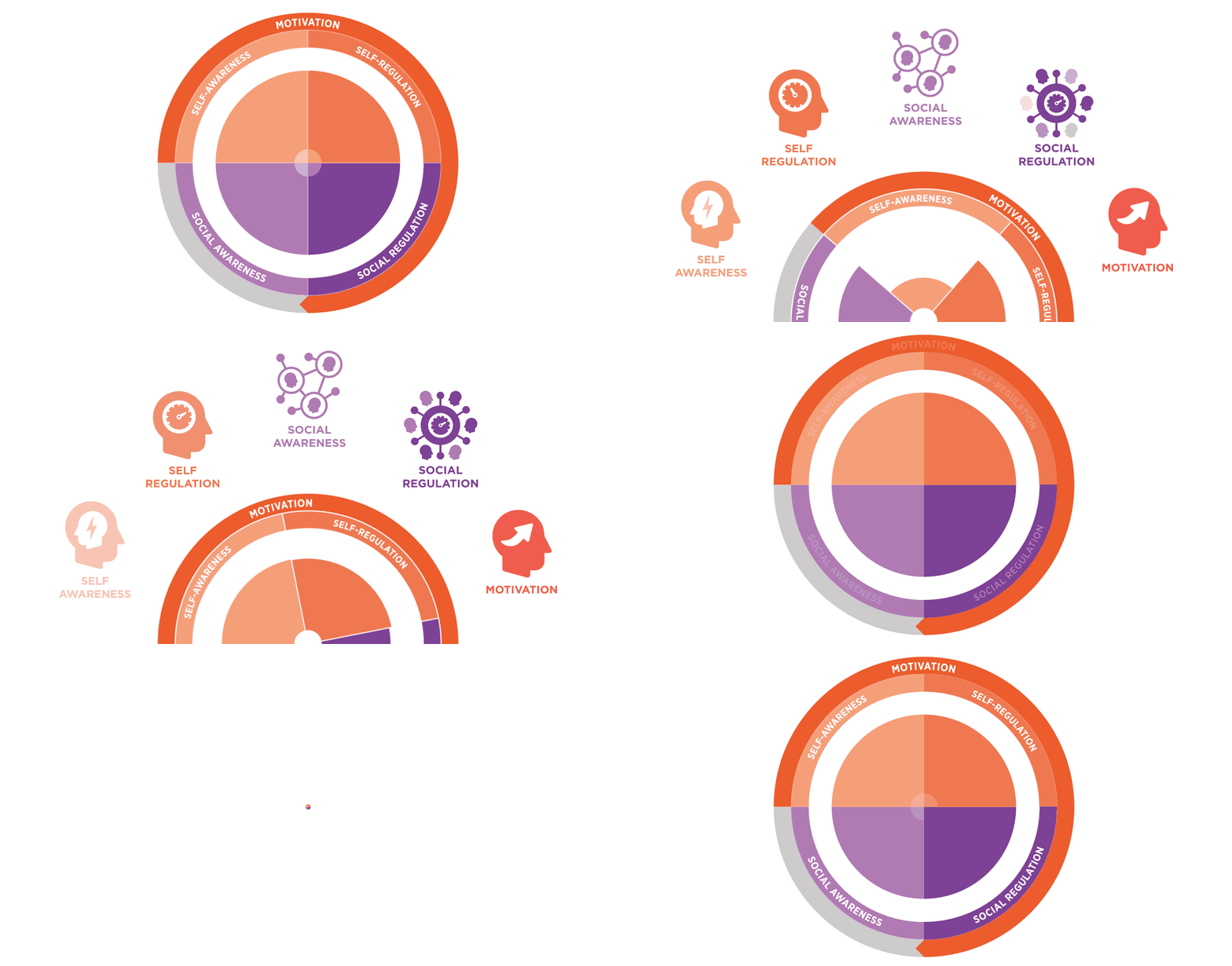
The EQ assessment measures five key components of emotional intelligence:
Self Awareness
The ability to recognize and understand your emotions, moods, and their impact on others.
Self Regulation
The ability to manage impulses, control reactions, and think before acting.

Social Awareness
The ability to understand others’ emotions and recognize how your actions affect them.
Social Regulation
The ability to manage relationships, influence others, and build strong networks.

Motivation
An internal drive to pursue goals with energy, persistence, and purpose, beyond external rewards.
Why Did TTI Create the EQ Assessment?
The modern understanding of emotional intelligence was widely popularized by Daniel Goleman.
The TTI EQ assessment was developed in 2008 and has been refined over time to provide deeper insight into emotional intelligence skills.
TTI’s EQ assessment allows individuals to explore their emotional awareness and behavioral impact through a personalized, research-backed approach.
Why is EQ Important Right Now?
Emotional intelligence is one of the most critical workplace skills today.
Fast Company reported on a study that showed “85% of [participating companies’] financial success was due to skills in ‘human engineering’, personality, and ability to communicate, negotiate, and lead. They found that only 15% was due to technical ability. In other words, people skills or skills highly related to emotional intelligence were crucial skills.”
As the workplace becomes more people-focused, developing emotional intelligence skills is essential to remain competitive.
The future of work prioritizes human connection. EQ is at the center of that shift.
How Does Emotional Intelligence Help You?

If you’re a job candidate, you might be surprised to know that 51% of employers said they had difficulty finding employees with developed soft skills. By improving your awareness of both yourself and others, you’ll nail the interview process, present yourself well, and thrive in the highly competitive job market.
If you’re working on a team, building your awareness through emotional intelligence will transform your interactions with your bosses and peers. You’ll be more aware of your emotions and in control of your reactions to conflict. “As we get more and more entrenched in people-driven interactions, EQ is a critical piece to focus on,” said Vanessa Boettcher, TTI Global Operations Officer. “You will frustrate and isolate people if you don’t have it.”
If you’re a leader, developing EQ is central not only to your development but also to your team’s. Leaders need to know how to speak confidently, understand and empathize with others’ needs, and read the room quickly to communicate impactfully.
Who Can Use the EQ Assessment?

TTI offers multiple EQ reports designed for different roles and use cases.
- Personal EQ reports provide insight into an individual’s emotional intelligence profile
- Reports are available for management, sales, and executive roles
The EQ assessment is often paired with other tools for deeper insight:
- Talent Insights combines DISC behavior with emotional intelligence
- TriMetrix EQ integrates DISC, the 12 Driving Forces, and EQ for a full view of behavior, motivation, and emotional intelligence
For Job Candidates
Developing emotional intelligence improves your ability to:
- Communicate effectively in interviews
- Demonstrate strong interpersonal skills
- Stand out in a competitive job market
For Teams
Building EQ skills helps teams:
- Improve communication and collaboration
- Navigate conflict more effectively
- Strengthen working relationships
“As we get more and more entrenched in people-driven interactions, EQ is a critical skill,” said Vanessa Boettcher, TTI Global Operations Officer.
For Leaders
For leaders, emotional intelligence is essential to:
- Show empathy and understanding
- Communicate with clarity and impact
- Build high-performing teams
What’s Your Next Step with EQ?
Getting started with emotional intelligence development doesn’t have to be complicated.
- Take an EQ assessment to understand your emotional intelligence profile
- Use your results to improve communication, leadership, and performance
- Explore how TTI assessments can support your team or organization
Contact us here to get started now!