
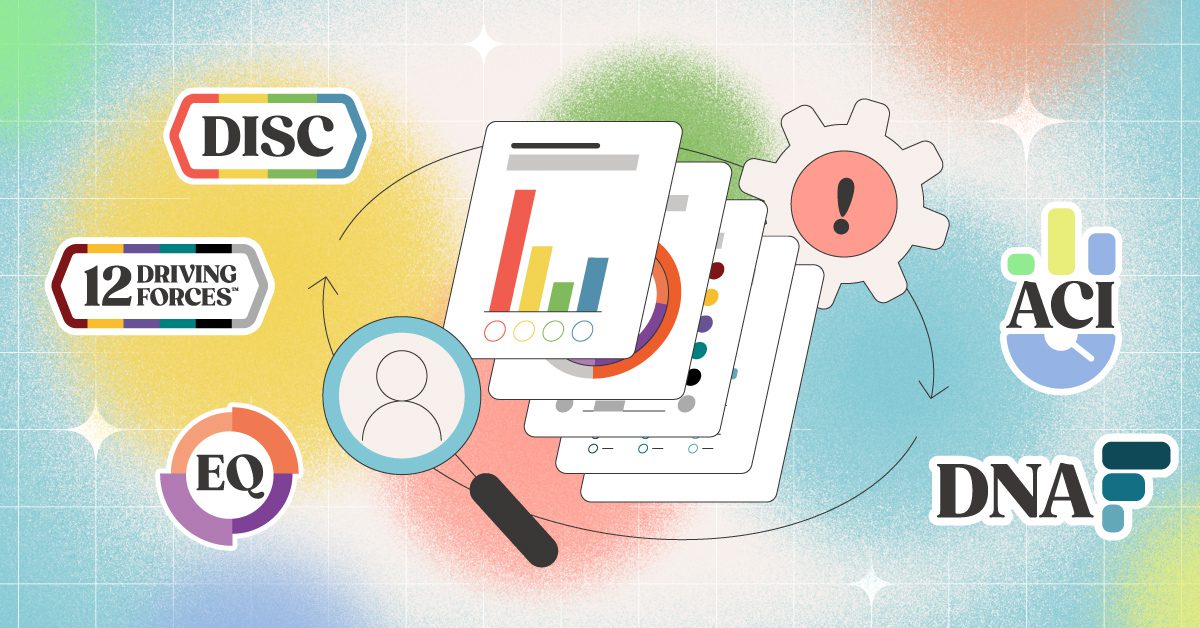
Personality assessments are powerful tools for improving communication, employee engagement, hiring, leadership development, and workplace performance. But organizations often make the mistake of relying on a single assessment to provide all the answers.
The reality is that no single assessment can fully capture the complexity of human behavior. That’s why a multi-science assessment approach is essential for organizations that want deeper, more actionable insights.
By combining multiple sciences, businesses can better understand how people behave, what motivates them, how they process information, and how they interact with others in the workplace.
Key Takeaways
- A multi-science assessment approach provides a more accurate view of people than relying on a single personality test.
- Using multiple assessments together helps organizations improve hiring, employee engagement, leadership development, and communication.
- TTI’s five sciences measure different aspects of human behavior, including behavior, motivation, emotional intelligence, competencies, and decision-making.
- Organizations that invest in employee development and self-awareness are better positioned to retain talent and reduce burnout.
- Multi-science assessments help leaders uncover actionable insights that support stronger teams and better workplace performance.
What Is a Multi-Science Approach to Assessments?

A multi-science approach uses several assessments together to measure different dimensions of an individual’s personality and workplace tendencies.
“Personality is complicated,” said Dustin Hebets, TTI’s Cognitive Behavioral Research Analyst. “The whole sum of someone’s personality is far too complex and multidimensional to be completely and accurately measured. However, assessments give us insight into specific aspects of an individual’s personality and let us measure and quantify those aspects.”
This is why organizations should be cautious of assessments that claim to define someone entirely with a single label or “type.” Human behavior is fluid, nuanced, and influenced by multiple internal and external factors.
“Assessments give us insight into specific aspects of an individual’s personality and let us measure and quantify those aspects.”
A multi-science strategy avoids oversimplification by delivering specific, segmented insights into how people think, communicate, behave, and perform. The result is a more accurate understanding of employees, candidates, and leaders.
The Five Sciences Available at TTI
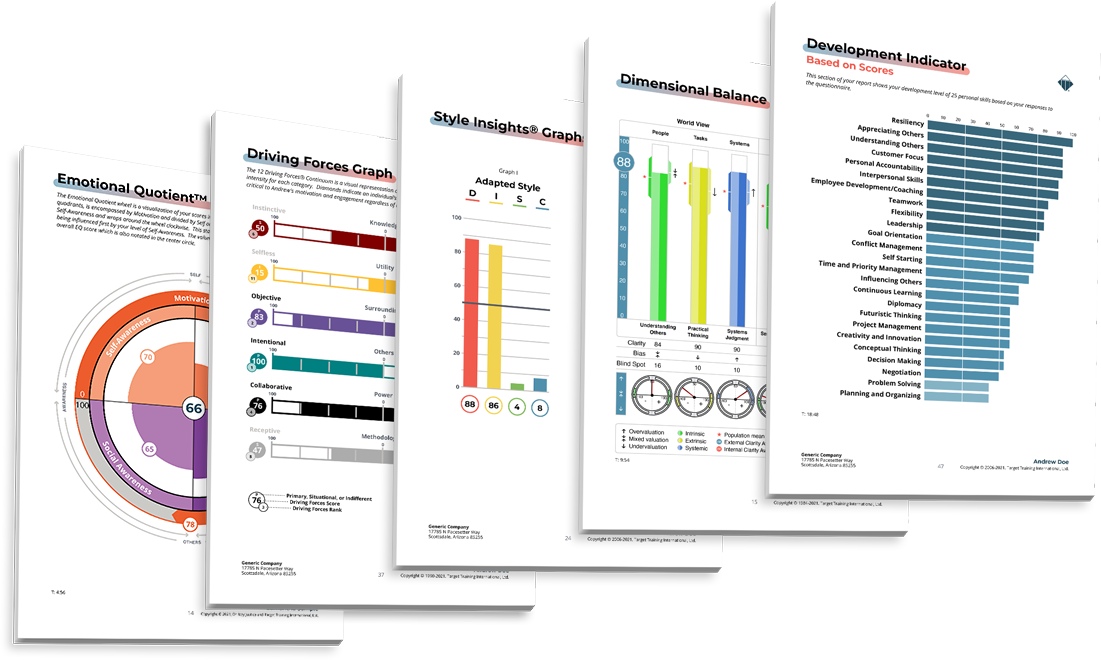
TTI’s assessment suite focuses on five core sciences that work together to provide a comprehensive view of workplace performance and potential.
DISC (Behaviors)
DISC measures behavioral style, or “how you do what you do.”
The DISC model evaluates four key behavioral factors:
- Dominance
- Influence
- Steadiness
- Compliance
Unlike simplified behavioral models, TTI measures the entire behavioral continuum, including both high and low tendencies for each factor. This creates a more complete picture of how individuals communicate, solve problems, and respond to workplace challenges.
12 Driving Forces (Motivators)
The 12 Driving Forces assessment measures motivation, or “why you do what you do.”
This science identifies the underlying drivers behind workplace behavior and decision-making. Understanding motivators helps organizations align people with roles, cultures, and responsibilities that naturally energize them.
Emotional Quotient (EQ, or Emotional Intelligence)
Emotional intelligence measures a person’s ability to understand, manage, and apply emotions effectively.
High emotional intelligence supports:
- Stronger collaboration
- Better communication
- Improved conflict management
- Increased productivity
- More effective leadership
EQ is especially valuable for leadership development and team dynamics.
DNA (Competencies)
The Competencies assessment identifies an individual’s top personal and professional skills based on 25 research-based workplace competencies.
Organizations use this science to:
- Develop leadership pipelines
- Identify skill gaps
- Support coaching initiatives
- Improve career development planning
ACI (Acumen)
The Acumen Capacity Index measures how a person thinks and processes information through the science of axiology.
ACI helps organizations understand an individual’s:
- Decision-making ability
- Problem-solving approach
- Situational awareness
- Capacity for strategic thinking
This science is especially useful for leadership roles and positions that require high-level judgment.
How Organizations Use a Multi-Science Assessment Strategy
 Organizations across industries are using multi-science assessments to improve workforce performance, employee retention, and leadership effectiveness.
Professional Development
Employees want to work for organizations that invest in their growth. Harvard shared research that found 94% of employees would stay longer at a job that invests in their development.
A multi-science assessment strategy helps managers and employees identify:
- Natural strengths
- Areas for development
- Leadership potential
- Communication preferences
- Motivational drivers
These insights create clearer development paths and support more meaningful coaching conversations.
When employees feel understood and supported, they are more likely to stay engaged and committed to the organization.
Hiring and Talent Selection
Scientifically validated assessments can significantly improve the hiring process when used the right way.
A multi-science approach helps organizations evaluate:
- Behavioral fit
- Motivational alignment
- Emotional intelligence
- Job-related competencies
- Decision-making capacity
This leads to more informed hiring decisions and stronger long-term role alignment.
Rather than relying solely on resumes and interviews, organizations can use assessment data to better predict workplace success and team compatibility.
Employee Engagement and Burnout Prevention
Employee engagement remains one of the biggest drivers of organizational success, but burnout continues to rise across industries.
Multi-science assessments help organizations address both challenges by improving workplace understanding and communication, by giving employees specific insights into each other and themselves.
With deeper insight into employees, teams can:
- Communicate more effectively
- Navigate conflict productively
- Improve collaboration
- Reduce workplace friction
- Build healthier work habits
Assessments also help leaders recognize stress patterns, motivational disconnects, and communication barriers before they become larger organizational issues.
Move Forward With a Multi-Science Assessment Approach
Using multiple sciences in your assessment strategy is one of the smartest ways to maximize your investment in talent development.
By combining behavioral insights, motivators, emotional intelligence, competencies, and decision-making data, organizations can unlock deeper workforce insights and create stronger, more effective teams.
If you’re ready to build a more strategic assessment approach, connect with the team at TTI to get started.