
Organizations succeed or fail based on the strength of their teams, and now more than ever, they’re feeling the pressure.
Ninety-three percent of executives say teams could deliver similar outcomes in half the time if they collaborated more effectively, while 37% of employees quit their positions because of poor engagement and toxic culture.
There’s a reason for that disconnect: poor team building. When leaders are more aware of their employees’ patterns, skills, and motivation, they can better align work responsibilities with team members’ strengths, align teams with the right insights to fully engage with their work, and build a culture that matters and lasts.
Relying on resumes, interviews, or intuition can mean missing deeper insights. That’s why you need the right tools. When organizations understand the full picture of a person, they can build teams that are more productive, collaborative, and resilient.
The Five Sciences Framework
Those deeper insights come from assessment tools with a multi-science approach. By using different assessments in tandem, you can strengthen your team with a multi-dimensional understanding of their strengths and needs in the workplace.
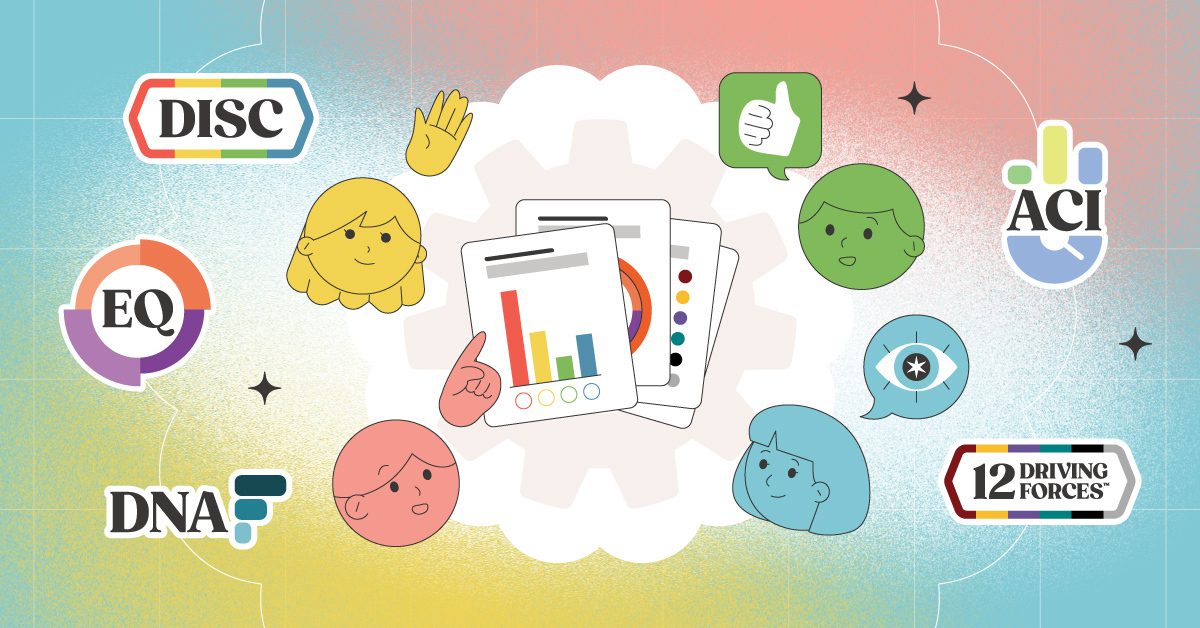
TTI Success Insights works with five sciences:
- Behavior (DISC)
- Motivators (Driving Forces)
- Emotional Intelligence (EQ)
- Competencies (DNA)
- Acumen (ACI)
Understanding DISC (Behavior)
DISC is one of the most popular assessments in the world for a reason: It reveals observable behavior, communication styles, working style preferences, and more.
DISC helps your team understand each other’s preferences around pace, communication, decision-making, and conflict resolution. It also provides examples of what each behavioral style looks like under pressure, so teams can be aware of each other’s needs when work gets difficult.
Use DISC as a team building tool to:
Improve communication. Instead of blundering into conversations blind, your team can use each other’s DISC profiles to find the best ways to share information.
Support collaboration. DISC creates a shared language and vocabulary for teams and organizations. Instead of getting bogged down by differences or distracted by similarities, you can use DISC to help leverage strengths and transform weaknesses into opportunities to work better together.
Reduce conflict. DISC provides a roadmap for resolving conflict. It reveals patterns of behavior that you (and your coworkers) might not be aware of but that definitely affect interactions, especially when they’re tense.
Understanding Driving Forces (Motivators)
TTI’s 12 Driving Forces® assessment reveals the ‘why’ behind behavior, which is particularly helpful in the workplace for understanding engagement, retention, and job performance.
Motivators explain why people engage with their work. 12 Driving Forces looks at both sides of six motivator categories, Knowledge, Utility, Surroundings, Others, Power, and Methodologies.
Use 12 Driving Forces as a team building tool to:
Align work with intrinsic drivers. Create natural opportunities by aligning their roles with what motivates them. This alignment can increase productivity, accuracy, and quality of completed work.
Increase engagement and job satisfaction. When you consider employee motivation and passion in their job role and responsibilities, it helps them feel cared for and understood in the workplace. Employees who feel cared for are 92 %more likely to feel engaged at work!
Prevent burnout caused by motivational misalignment. Burnout is increasingly common in the workplace, but you can stop it before it starts by considering what your employees really need and making sure they get it!
Understanding EQ (Emotional Intelligence)
TTI’s EQ assessment measures how individuals recognize, understand, and manage their own and others’ emotions. It examines five key areas pertaining to intrapersonal and interpersonal relations:
Self Awareness
The ability to recognize and understand your moods, emotions, and drives, as well as their effect on others.
Self Regulation
The ability to control or redirect disruptive impulses and moods, as well as the ability to suspend judgment and think before acting.
Motivation
An internal drive or propensity to pursue goals with energy and persistence.
Social Awareness
The ability to understand the emotional makeup of other people and how your words and actions affect others.
Social Regulation
The ability to influence the emotional clarity of others through a proficiency in managing relationships and building networks.
Use EQ (Emotional Intelligence) as a team-building tool to:
Build stronger trust across individuals, teams, and your entire organization. EQ helps team members develop greater awareness and empathy. This mindful approach fosters authentic, respectful communication across all team levels. All of these positive factors build trust, which is essential for strong collaboration and healthy team dynamics.
Promote healthier conflict resolution. While conflict is inevitable in any team, emotional intelligence helps people navigate disagreements constructively. By improving emotional awareness and regulation, team members can approach difficult conversations with greater patience, perspective, and professionalism.
Develop more effective leaders. Leaders with strong emotional intelligence are better equipped to motivate, coach, and support their teams. By strengthening skills such as empathy, emotional regulation, and social awareness, EQ development helps leaders respond thoughtfully to challenges, guide teams through change, and create environments where people can perform at their best.
Understanding DNA (Competencies)
TTI’s DNA™ (Competencies) assessment reveals the skills people rely on to perform effectively, which is particularly helpful in the workplace when evaluating performance, development opportunities, and role alignment.
Competencies explain how people apply their skills to solve problems, communicate, and achieve results at work. DNA measures 25 professional competencies grouped by relating, thinking, and working. These skills influence how individuals lead, collaborate, manage priorities, and execute responsibilities in real-world situations.
Use DNA (Competencies) as a team-building tool to:
Align responsibilities with natural strengths. Create opportunities for individuals to use the competencies where they naturally excel. When team members can apply their strongest skills to their daily responsibilities, organizations often see improvements in productivity, work quality, and overall effectiveness.
Strengthen accountability and role clarity. DNA helps clarify the skills required for success in each role. When team members understand both their own competencies and those of others, expectations become clearer, responsibilities are better distributed, and teams operate with greater accountability.
Accelerate team development. By identifying shared strengths and development opportunities, leaders can design targeted coaching and training for the team. This intentional development helps teams improve their capabilities faster and perform at a higher level together.
Understanding ACI (Acumen)
TTI’s ACI™ (Acumen Capacity Index) assessment reveals how people think, make decisions, and apply judgment in real-world situations. This insight is especially valuable in the workplace when evaluating leadership potential, decision-making effectiveness, and problem-solving ability.
Acumen explains how people process information and evaluate situations. The ACI measures three core areas of applied judgment: Self-Awareness, Awareness of Others, and Awareness of the Environment. Together, these dimensions reveal how individuals interpret situations, respond to challenges, and make practical decisions.
Use ACI as a team-building tool to:
Encourage better strategic thinking. ACI helps teams understand how individuals evaluate situations and interpret the environment around them. When teams develop stronger environmental awareness, they become more capable of thinking strategically, anticipating challenges, and identifying opportunities before they arise.
Develop stronger judgment under pressure. High-pressure situations require clear thinking and sound judgment. By strengthening self-awareness and awareness of others, ACI helps individuals pause, evaluate situations more effectively, and make better decisions even when the stakes are high.
Improve problem-solving across the team. Different perspectives lead to stronger solutions. ACI reveals how people process problems and assess possible outcomes, helping teams combine their insights, evaluate options more thoroughly, and arrive at better decisions together
Building Teams That Actually Work
Using a five-science framework helps teams move beyond surface-level understanding to see the full picture of how their people think, communicate, perform, and collaborate. This holistic insight transforms team building from guesswork into a strategic advantage.
When people feel aligned with their work and connected to their teammates, collaboration becomes natural. Use the right tools to create a workplace where both people and performance thrive.
Ready to experience TTI’s tools for your team? Connect with us now.