
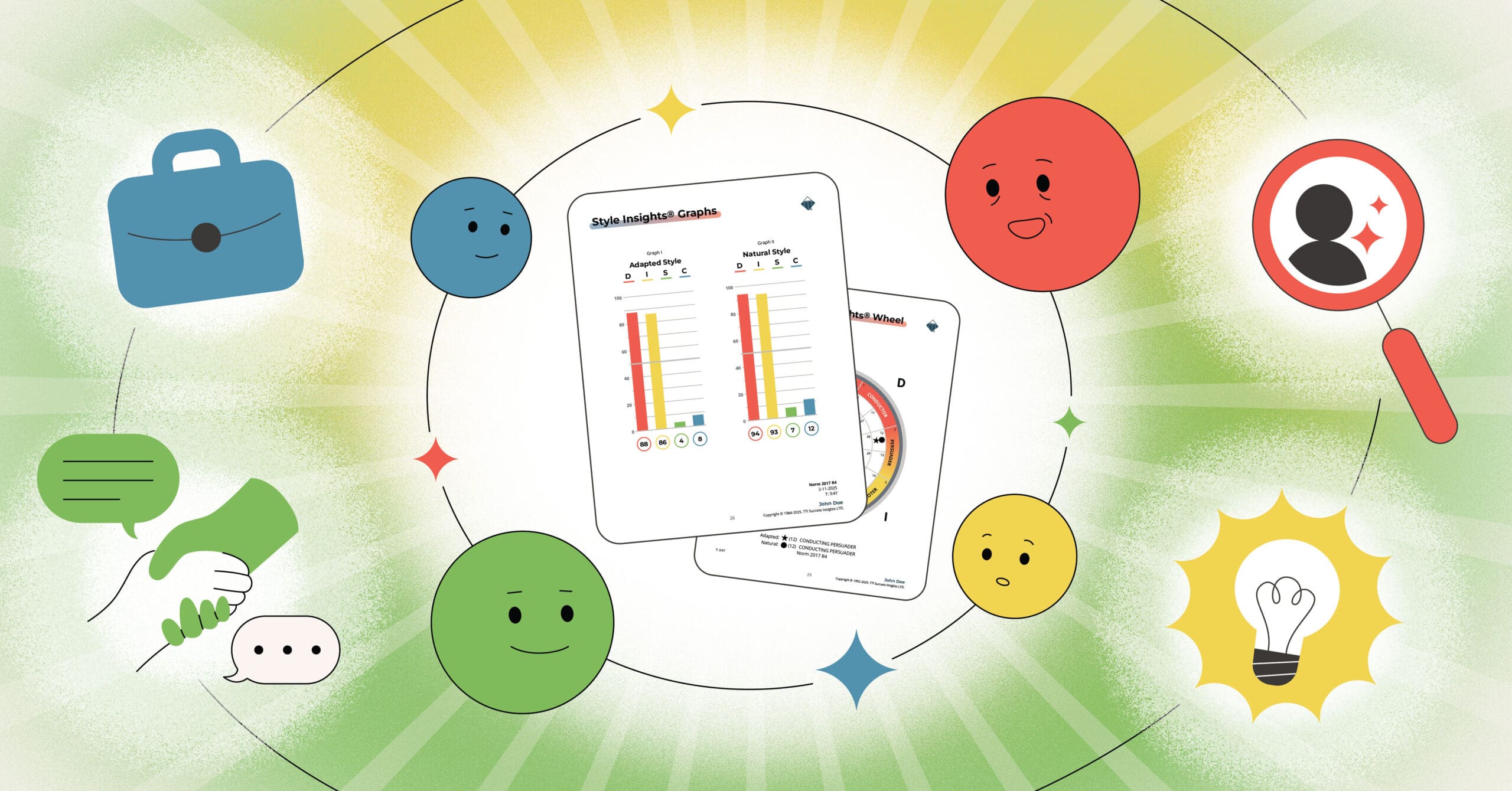
In the hiring process, it can be difficult to tell when someone is being their authentic self and whether they’re putting on a good show. Resumes only tell part of the story, and interviews can be subjective. If your team isn’t careful, it can lead to hiring mistakes and long-term expenses; after all, the cost of a bad hire can’t be ignored!
To make the right decisions, you need the right tools. But what are those, exactly? Can assessments actually help you hire better employees? The answer is yes—when they’re used correctly.
Key Takeaways
- Assessments help employers understand how candidates naturally communicate, solve problems, and work with others.
- The best hiring decisions combine assessments with interviews, resumes, and structured selection processes.
- Assessments should never be the sole hiring criteria but instead provide objective insights that reduce bias.
- Job benchmarking helps organizations determine which patterns are most likely to succeed in a specific role.
- TTI Success Insights combines data with motivators, emotional intelligence, competencies, and job benchmarking to provide a more complete hiring picture.
What is an Assessment?
Assessments are tools used in the workplace to evaluate traits such as communication style, motivation, EQ, skills, and more. The actual function and content of the questionnaire and report vary between assessment providers.
Take DISC, for example. DISC is a very popular workplace assessment for hiring, but it’s not owned by just one company or business. In fact, there are dozens of assessment providers that use the DISC framework to design assessments, and not all of them are created equally.
To find a reliable assessment provider for hiring, look for scientifically validated, EEOC-compliant assessments.
Other popular assessments for hiring measure:
- Motivation: Measure why someone makes decisions, what they’re passionate about, and how they find fulfillment at work
- Emotional intelligence: Measure a candidate’s awareness and ability to regulate their emotions
- Skills: Measure skills such as creative thinking, communication, resilience, accountability, and more.
- Judgment: Measure how a candidates thinks or perceives information when understanding the world and themself
- A multi-science approach: Measure a candidate with a combination of these assessments for a more complete picture and understanding
Can Assessments Be Used in Hiring?
Yes, assessments can be used in hiring! They are commonly used to:
- Improve hiring decisions
- Reduce personal bias
- Compare candidates objectively
- Match candidates to role requirements
- Improve retention with better job fit
Assessments should support human decision-making, not replace it. They aren’t cognitive ability tests or personality tests, because they aren’t tests at all. Assessments can’t be ‘passed’ or ‘failed’; they only reveal information and opportunities. Sometimes, a candidate’s assessment results align with a job role, and sometimes they don’t.
It’s up to the talent acquisition team to determine if candidates are the right fit. Assessments can inform that determination, but the results should not be solely used to make that decision or discriminate in any way.
Benefits of Using Assessments in Hiring
Reduce Costly Bad Hires
Improved job retention is a huge benefit of assessments in hiring. Instead of hiring the candidate who interviews well but fails at the daily responsibilities of a job, you can accurately measure the most relevant factors for a job and find the candidate who will actually produce the results you need.
Better job fit saves you money in the short and long run by reducing repeated talent acquisition and onboarding costs and preventing high turnover. This retention improves productivity and your team’s ability to connect with each other and get work done right.
Create More Objective Hiring Decisions
The standardized data from assessments gives your hiring team concrete, measurable information to help inform decisions.
Instead of relying on gut instinct or personal bias, you can find the truly right candidate for the job. By using that data in hiring decisions, you can also create a more consistent hiring process that is repeatable over time and protects your company.
Improve Team Fit
Using assessments in hiring can help create cohesive, productive teams that support each other. Complement existing team dynamics with new talents and an increased awareness of communication styles.
Assessment results also help with conflict management because your leadership can gain a solid understanding of a new hire as they complete onboarding and perform their daily tasks.
The benefits extend if your entire team uses assessments! They create a shared language that teams can utilize as a shorthand for understanding. For example, if someone is feeling frustrated, they can utilize language from the EQ assessment and say, “My cup is cloudy right now.” This phrase is shorthand for “My emotions are becoming elevated” and communicates that without getting into frustrating details, which prevents emotional hijacking.
What Assessments Should—and Shouldn’t—Measure
Hiring Assessments Should Measure:
- Preferred communication style
- Motivational factors and passions
- Workplace interactions
- Emotional Intelligence
- Essential ‘soft’ skills
- Worldview and thinking patterns
Hiring Assessments Should Not Measure:
- Intelligence
- Life experience
- Cultural similarity
- Protected characteristics
Are Assessments Legal for Hiring?
It’s crucial to review the EEOC’s guidelines on the use of assessments in the workplace and find an assessment provider that uses updated validation standards.
EEOC Best Practices for Using Pre-Employment Assessments
Organizations should implement assessments thoughtfully and consistently to help support fair hiring practices and reduce legal risk.
Here are several widely accepted best practices aligned with EEOC guidance and general employment law principles.
1. Ensure Assessments Are Job-Related
Assessments should measure characteristics that are directly relevant to successful job performance. Every assessment should have a clear business purpose and align with the knowledge, skills, abilities, behaviors, or competencies required for the specific role.
For example:
- A sales assessment should measure behaviors and competencies associated with sales success.
- A leadership assessment should evaluate leadership-related capabilities rather than unrelated personality traits.
When assessments are tied to actual job requirements, hiring decisions become more objective and defensible.
2. Apply Assessments Consistently
Consistency is one of the most important principles in compliant hiring.
Employers should:
- Administer the same assessment to all candidates applying for the same position.
- Use the same evaluation criteria for every applicant.
- Avoid making exceptions unless required as a reasonable accommodation.
A standardized hiring process helps reduce bias and creates a more equitable candidate experience.
3. Use Validated Assessments
Select assessments that are professionally developed and validated for employment use.
A validated assessment demonstrates evidence that it measures what it claims to measure and that its results are related to workplace performance or other legitimate employment outcomes.
Assessment providers should be able to provide documentation regarding:
- Research supporting the assessment
- Reliability and validity studies
- Appropriate use cases
- Technical documentation
Using validated assessments increases confidence in hiring decisions and supports stronger talent outcomes.
4. Treat All Candidates Equally
Evaluate assessment results fairly and without discrimination.
Organizations should:
- Use objective scoring methods.
- Avoid decisions based on protected characteristics such as age, race, gender, religion, sexual orientation, disability, or national origin.
- Provide reasonable accommodations during the assessment process when required by law.
The goal is to evaluate candidates based on their ability to perform the essential functions of the position, not on unrelated personal characteristics.
5. Combine Assessments with Other Hiring Methods
No assessment should be the sole basis for making an employment decision.
Instead, assessments work best as one component of a structured hiring process that may also include:
- Structured interviews
- Resume and application reviews
- Work samples or job simulations
- Reference checks
- Skills or technical evaluations
Using multiple sources of information provides a more complete picture of each candidate and supports better hiring decisions.
Stay Compliant with Employment Laws
Employment laws governing hiring practices vary by country, state, province, and local jurisdiction. Employers should ensure their hiring processes comply with all applicable employment laws, regulations, and guidance in the locations where they operate.
When implementing assessments, organizations should:
- Consult qualified legal counsel or HR professionals when appropriate.
- Review local requirements regarding hiring and candidate testing.
- Periodically evaluate hiring practices to ensure ongoing compliance as regulations evolve.
When used appropriately, scientifically validated assessments help organizations make more informed, objective hiring decisions while supporting fairness, consistency, and better talent outcomes.
Frequently Asked Questions
Can assessments predict job performance?
Assessments can help predict the likelihood of success in a role when they measure job-relevant behaviors, motivations, competencies, and emotional intelligence.
While no assessment can guarantee future performance, validated workplace assessments provide objective insights that complement interviews, resumes, and reference checks.
Are assessments accurate?
Yes, when they are scientifically validated and used appropriately.
High-quality workplace assessments are developed through extensive research and validation to ensure they consistently measure what they are designed to measure.
Assessment accuracy also depends on using assessments for their intended purpose and interpreting the results within the context of the job and the overall hiring process.
What’s the difference between DISC and personality tests?
DISC is a behavioral assessment that measures how people are likely to behave and communicate in the workplace based on four behavioral dimensions: Dominance, Influence, Steadiness, and Compliance.
Many personality tests measure broader personal characteristics, interests, or psychological traits. TTI Success Insights’ DISC assessment focuses specifically on observable workplace behaviors, making it a valuable tool for hiring.
Should every candidate take an assessment?
Organizations often achieve the best results by using assessments consistently for candidates applying to the same role or job family. This creates a fair, standardized hiring process while providing objective data for comparison.
Assessments should support—not replace—interviews, skills evaluations, and other hiring methods. Employers should also ensure their assessment process complies with applicable employment laws and regulations.
When should assessments be given?
Behavioral assessments are typically administered after an initial resume review or screening interview and before final hiring decisions. This timing allows employers to evaluate qualified candidates using objective data while integrating assessment results with interviews, job benchmarking, skills evaluations, and reference checks.
Many organizations also use assessment results to support onboarding, coaching, and employee development after hire.
Can assessments reduce employee turnover?
Assessments can help reduce turnover by improving person-job fit and identifying candidates whose behavioral tendencies, motivations, and competencies align with the demands of the role.
When employees are well matched to their positions, they are often more engaged, productive, and likely to remain with the organization. Assessments are most effective when used as part of a comprehensive talent strategy that includes hiring, onboarding, leadership development, and employee coaching.
How long do assessments take?
The time required depends on the assessment being used.
Most TTI Success Insights behavioral assessments can be completed in approximately 10 to 20 minutes, while more comprehensive, multi-science assessments that measure behavior, motivators, emotional intelligence, and competencies may take 30 to 60 minutes. Most candidates can complete assessments online from any device.
Are assessments biased?
Validated workplace assessments are designed to provide standardized, objective information that supports more consistent hiring decisions. They should measure job-related characteristics rather than protected traits or personal demographics.
To promote fairness, employers should use validated assessments consistently, ensure they are job-relevant, and combine them with interviews and other selection methods. Organizations should always follow applicable employment laws, EEOC guidance, and local regulations when using assessments in hiring.
Conclusion
Hiring is too important to rely on resumes and interviews alone. By combining insights with job benchmarking and other workplace sciences, organizations can make more confident hiring decisions, improve employee performance, and build stronger teams from the very beginning.